
Frozen and burst pipes in Williams
Williams sits at nearly the same elevation as Flagstaff, and on clear winter nights the town often drops lower, with cold air draining off Bill Williams Mountain into the valley. Single-digit lows are normal a few times each winter. That is why frozen pipes lead the list of water calls here, especially in January.
The homes most at risk are the older ones near downtown, where plumbing often runs through uninsulated crawl spaces or exterior walls, and cabins and second homes in the pines south of town that may sit empty between visits. Mobile and manufactured homes, with water lines running under the floor, freeze fast if their skirting is damaged or heat tape fails.
When a pipe splits, the order is always the same: shut the water off, drain the lines, then get the water out before it soaks into subfloors and walls. The burst pipe water damage page walks through the cleanup, and the guide on what to do when a frozen pipe bursts is worth reading before the first cold snap.
Snow load, ice dams and older roofs
Williams averages a lot of snow, and storms can drop a foot or more at a time. Older homes and commercial buildings downtown often have flat or low-slope sections behind false fronts and additions built in different decades, which creates valleys and seams where snow piles up and melts slowly. Ice dams form at the eaves of pitched roofs on houses with limited attic insulation.
Ceiling stains that show up during a thaw usually trace back to one of those spots. The ceiling water damage page explains drying a wet attic and replacing ceiling sections. For a heavy snow load that is causing a sag, get people out of the room underneath and call right away.
Route 66 buildings and historic homes
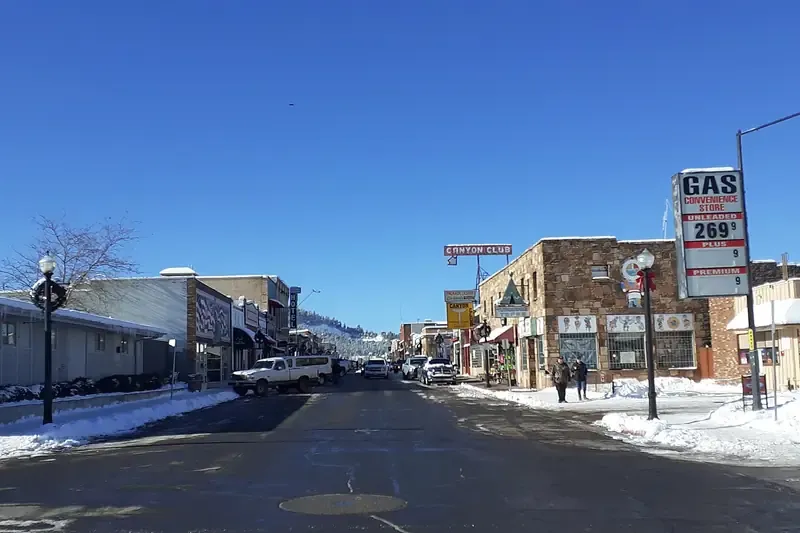
Downtown Williams is a historic district along Route 66 with buildings from the early 1900s. Water damage in older buildings needs a slightly different approach. Plaster walls can often be dried and repaired instead of torn out. Old-growth wood flooring may cup when wet but often flattens as it dries, then can be sanded. Lath-and-plaster ceilings are heavy, so a wet one needs to be supported or brought down carefully.
Older plumbing such as galvanized steel or cast-iron drains corrodes from the inside and tends to fail at joints. If one section has failed, others nearby are often close behind, so it is worth having a plumber look at the rest of the run during the repair. Anything built before the mid-1980s may contain asbestos in some textures, flooring or pipe wrap, which should be tested before it is disturbed.
Fire and smoke damage in Williams
Wood stoves and fireplaces are common heat sources in Williams, and chimney fires from creosote buildup are a real risk in long, cold winters. Kaibab National Forest surrounds the town, and wildfire smoke drifts in during fire season. Homes along the forest edge and up toward Bill Williams Mountain carry more ember exposure.
After a house fire, the restoration job covers three things together: fire damage, smoke residue through the house and the water used to fight it. The fire damage restoration page covers board-up and rebuild, and smoke damage cleanup covers soot and odor in rooms the fire never reached. In winter, securing a fire-damaged house includes draining the plumbing so pipes do not freeze while the heat is off.
Tourism, rentals and businesses
As the gateway town for the Grand Canyon Railway and South Rim visitors, Williams has a lot of motels, short-term rentals and restaurants. Water damage in a lodging business is a scheduling problem as much as a repair problem: rooms out of service cost money every night. For commercial properties, ask for a drying plan that works room by room so part of the building can stay open.
Short-term rentals that sit empty between guests face the same late-discovery risk as vacation homes anywhere. A leak sensor and an automatic shutoff valve are inexpensive compared with a loss that ran for two days.
Water damage costs in Williams
Costs in Williams track closely with Flagstaff, with some jobs a little higher for travel time and winter access. Frozen pipe cleanups commonly run $1,000 to $4,500 depending on how many rooms got wet. Ceiling leaks from ice dams or snowmelt usually cost $700 to $3,000 to dry and repair. Fire and smoke jobs vary widely, from a few thousand dollars for a contained kitchen fire to much more for structural damage. The guide on water damage restoration costs explains what drives these numbers.
Water supply, drought and plumbing in Williams
Williams gets its water from local reservoirs and wells, and the town has dealt with drought restrictions in dry years. Low-flow fixtures and water-saving habits are common, and that is good for the town but has one side effect: in a house where little water moves, pipes in cold spots freeze more easily because there is less warm water flowing through them. On the coldest nights, letting a faucet on an exterior wall drip, even in a water-conscious home, is cheap insurance against a burst.
Older homes may also have pressure regulators and galvanized pipe nearing the end of its life. If water pressure seems unusually high, with banging pipes or leaky faucets, have a plumber check the regulator; high pressure stresses supply lines and fittings, and a failed supply line is the most common non-freeze water loss in any home.