Updated October 26, 2026
How an ice dam forms
An ice dam needs three things: snow on the roof, a roof deck that is warm in the middle and cold at the edges, and outside temperatures that hover around or below freezing. Flagstaff supplies all three most winters.
- Heat escapes from the living space into the attic through gaps around lights, plumbing vents, attic hatches and thin insulation.
- That heat warms the roof deck above the attic, and snow on that part of the roof melts from below even when the air outside is below freezing.
- Meltwater runs down the roof under the snow until it reaches the eave, which hangs past the warm walls and stays cold.
- There it freezes, building a ridge of ice along the edge of the roof and in the gutters.
- More meltwater backs up behind the ridge into a pool. Shingles are designed to shed water running downhill, not to hold back standing water, so it seeps under them and into the attic or down the top of the wall.
Flagstaff's sunny winter days make this worse. A big storm followed by a week of bright sunshine and cold nights is prime ice dam weather: the sun and attic heat melt snow by day, and the eaves refreeze it every night.
Signs an ice dam is leaking into your home
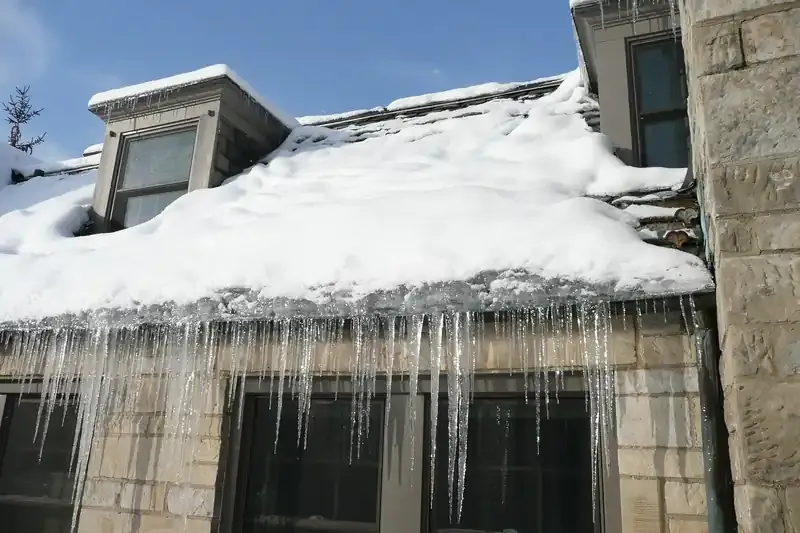
- Thick ice ridges along the eaves and long icicles, especially if they hang from the gutters in a solid curtain.
- Brown or yellow stains on the ceiling near exterior walls, or along the top of walls.
- Peeling paint or bubbling drywall high on exterior walls.
- Water dripping from window frames or soffits during sunny days after a storm.
- Wet or matted insulation along the edges of the attic.
- Frost or dark stains on the underside of the roof sheathing in the attic.
Not every icicle means a leak, but long, thick ones along a large section of roof are a sign of heat loss worth fixing.
Safe ways to deal with an ice dam now
The goal in the moment is to give the water a way off the roof and keep it out of the house.
| Method | Safe? | Notes |
|---|---|---|
| Roof rake from the ground | Yes | Removes snow from the bottom few feet so less meltwater reaches the dam. |
| Calcium chloride in a sock or nylon | Yes, with care | Laid across the dam, it melts a channel. Avoid rock salt, which damages shingles and plants. |
| Professional steam removal | Yes | Roofing contractors use low-pressure steamers that melt ice without harming shingles. |
| Chipping with a hammer, axe or ice pick | No | Breaks shingles and gutters, and climbing an icy roof is dangerous. |
| Pressure washer or torch | No | Damages shingles and is a fire risk. |
Inside, catch drips in buckets, move furniture and electronics, and if a ceiling bulges, keep people away and let a professional drain it. Wet insulation above the ceiling holds water against the drywall, so the ceiling may keep dripping for a while after the ice is gone. The ceiling water damage page covers drying and repair.
Fixing it for good: the attic
Heat tape on the eaves and new gutters treat the symptom. The cure is keeping the roof deck cold so snow does not melt from below. That takes three things working together:
- Air sealing. Most attic heat comes through gaps, not through insulation. Seal around recessed lights, bath fans, plumbing and wiring penetrations, the attic hatch, and the tops of interior walls.
- Insulation. Bring attic insulation up to current recommendations for Flagstaff's climate, which is substantially more than many older homes have. Make sure it covers the tops of exterior walls without blocking soffit vents.
- Ventilation. Cold outside air should enter at the soffits and exit at the ridge, keeping the underside of the roof close to outdoor temperature. Baffles keep insulation from blocking the soffit vents.
Also check that bathroom and kitchen fans vent all the way outside, not just into the attic. Warm, moist air dumped into an attic adds heat and moisture that makes both ice dams and attic mold worse.
When a roof is replaced, an ice-and-water shield membrane along the eaves adds a backup layer that keeps backed-up water from reaching the deck. Many Flagstaff roofers install it as standard.
Which Flagstaff homes get ice dams
Ice dams can happen on any pitched roof with snow, but some homes in the area see them far more often:
- Older homes with thin insulation, common around downtown and in established neighborhoods like Sunnyside and Coconino Estates.
- Homes with complex rooflines, such as dormers, valleys and multiple roof levels, where snow drifts and melts unevenly. Many newer homes on the south and west sides fit this description.
- Cathedral and vaulted ceilings, where there is little or no attic space for insulation and ventilation.
- Homes with recessed lights in the top-floor ceiling, each of which can leak heat into the attic.
- North-facing eaves that stay shaded and cold while the rest of the roof gets sun.
After the leak: drying, mold and insurance
Once the ice is gone and the leak stops, wet insulation should be removed and the ceiling cavity dried; otherwise it can stay damp for weeks and grow mold on the drywall paper and roof sheathing. The water mitigation process handles that, and the mold remediation page covers what to do if growth has already started.
Many homeowners policies cover the interior water damage from an ice dam, while excluding the cost of removing the ice or repairing the roof itself. Document the ice, the stain and the wet insulation with photos, and see the coverage table in the restoration cost guide.
Heat cables: do they help?
Roof and gutter heat cables, laid in a zigzag along the eaves, melt channels through ice so water can drain. They can help on a problem section of roof, especially over a porch or a north-facing eave, but they treat the symptom, use electricity all winter, and can fail without anyone noticing. They work best as a backup to air sealing and insulation, not as the main fix. If you install them, use cables rated for roofs, plug them into a GFCI outlet, and check them each fall.
- Run them only during snowy periods, not all winter.
- Make sure the cable extends into the gutter and downspout, or water will refreeze there.
- Never cover cables with insulation or let them overlap.
Ice dams on metal and flat roofs
Metal roofs, common on rural homes around Parks and Bellemont, usually shed snow in sheets before ice dams can form, which is one reason they are popular here. The tradeoff is sliding snow, which can tear off gutters and bury anything below the eave; snow guards help. Flat and low-slope roofs do not get classic ice dams, but snow piles up against parapets and around drains, and freezing at the drain can pond water that finds seams. On those roofs, keep drains clear of snow and ice after storms.