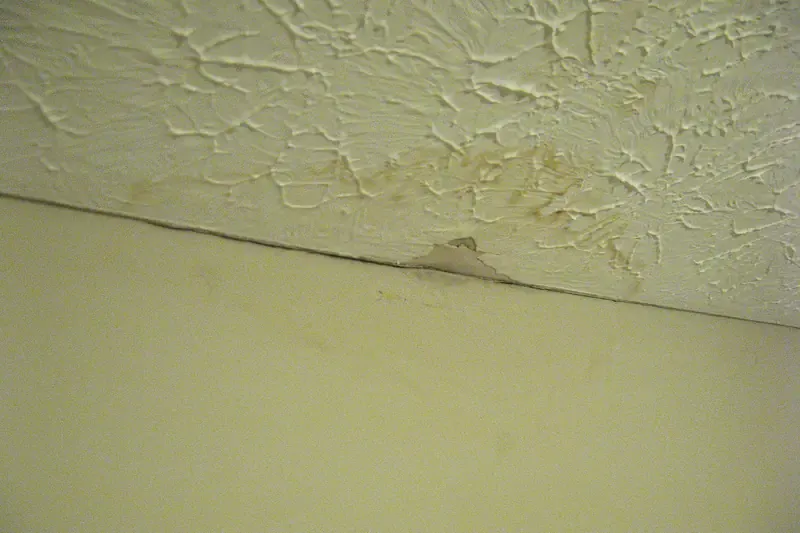
Water damage repair starts with proof the house is dry
The most common mistake after a leak is rebuilding too soon. New drywall over a wet stud or new flooring over a damp subfloor traps moisture, and the result is a musty smell, popping nail heads, warped boards or mold a few months later. Before any repair in a Flagstaff home, ask to see the final moisture readings from the mitigation stage. They should match a dry, unaffected part of the house.
Once the readings are good, repair is ordinary construction: hang, tape and texture drywall, prime and paint, install flooring and trim, and repair or replace cabinets. What makes it a water damage job is the matching and the paperwork.
Drywall, texture and paint
Most Flagstaff homes built from the 1970s on use drywall with an orange-peel or knockdown texture. Matching that texture is the difference between a repair you can see from across the room and one you cannot find. A careful crew will sample the texture, practice on scrap and feather the new texture out past the patch.
Older homes near downtown, around the Townsite neighborhoods and in parts of Sunnyside may have plaster or several layers of drywall. Plaster can often be dried and repaired rather than replaced, which saves money and keeps the original walls.
- Ceiling stains from a slow leak usually need stain-blocking primer even after drying; regular paint lets the brown ring bleed back through.
- Popcorn ceilings and some joint compounds in homes built before the mid-1980s can contain asbestos. Have suspect material tested before anyone scrapes or cuts it, and ask the contractor how they handle a positive result.
- Paint is usually repainted wall to wall or corner to corner, not as a patch, so the sheen matches.
Flooring after water damage
Flooring decisions depend on what was down and how long it was wet.
| Flooring | Can it be saved? | Notes |
|---|---|---|
| Carpet with pad | Often, if clean water and fast extraction | Pad is usually replaced. |
| Solid hardwood | Sometimes | Cupping may flatten after drying; sanding and refinishing can follow. |
| Engineered wood | Rarely | Layers can separate once soaked. |
| Laminate | Rarely | Core swells at the seams and does not shrink back. |
| Luxury vinyl plank | Often | Planks can be lifted, the subfloor dried, then reinstalled if undamaged. |
| Tile | Usually | Watch for loose tiles and cracked grout over a wet subfloor. |
Matching discontinued flooring is a common headache. Many policies cover replacing a continuous floor in adjoining rooms so it matches, so ask your adjuster before you accept a patch that will not match.
Cabinets, trim and doors
Kitchen and bathroom cabinets are where water damage repair gets expensive. Most builder-grade cabinets use particleboard boxes that swell permanently when soaked. Sometimes only the toe kicks and bottom panels need replacing; sometimes the whole base run has to come out to dry the wall behind it. Countertops can often be lifted and reused, though stone tops need care.
Baseboards and door casing in MDF swell and should be replaced. Solid wood trim can often be dried and reinstalled. Interior doors that wicked water at the bottom may swell enough that they stick.
What water damage repair costs in Flagstaff
Repair costs vary more than mitigation because they depend on finishes. A ceiling patch with texture and paint often runs $400 to $1,200. Rebuilding flood-cut walls in one room typically lands between $1,200 and $3,000. Larger repairs with flooring and cabinets commonly run $3,000 to $7,500, and whole-floor losses can go well past that. Mountain-town labor and material delivery can push local prices a little above Phoenix rates, especially in winter.
Get the rebuild estimate in the same line-item format your insurer uses. That makes it easy to compare against the adjuster's numbers and spot anything missing, such as texture, primer, or contents moving.
Repair after a burst pipe, roof leak or flood
Every water loss leads here eventually, but the source changes the repair. After a burst pipe, the plumbing fix itself is a separate bill from the restoration. After a ceiling leak, the roof or ice dam has to be fixed before the ceiling is closed up. After flooding, insurers treat outside water differently and you may need flood coverage for repairs. If you are not sure where the water came from, start with water removal and let the moisture map tell the story.
Choosing who does the rebuild
After a covered loss, you are free to pick your own contractor for repairs, even if the insurer suggests one. Many homeowners use the same company that did the drying because they already know the job. Others get a second bid from a general contractor or remodeler they trust. Either way, the rebuild contractor should have an Arizona Registrar of Contractors (ROC) license for the type of work, carry liability insurance, and give you a written scope with line items.
- Compare bids line by line rather than by total. A low bid that leaves out texture, primer, or baseboard often ends up costing the same.
- Ask how long materials take to arrive. Cabinets and specialty flooring can take weeks to reach Flagstaff.
- Get the payment schedule in writing. Insurers usually pay in stages, and your contractor's draws should line up with them.
- Ask about permits for any electrical, plumbing, or structural work. The City of Flagstaff handles permits inside city limits; Coconino County handles unincorporated areas.
Timeline for water damage repair
A one-room drywall and paint repair often takes two to four days of work, spread over about a week because joint compound and texture need drying time between coats. Replacing flooring through several rooms adds a few days. Kitchen cabinet replacement is the long pole: custom or semi-custom cabinets can take several weeks to arrive, which is why some homeowners choose in-stock cabinets after a water loss. Winter weather can also slow deliveries up the I-17 and I-40 corridors, so plan for a little slack.
While you wait, keep an eye on the dried areas. A musty smell or new staining before the rebuild starts means something is still wet, and it is far cheaper to find now than after new drywall goes up.