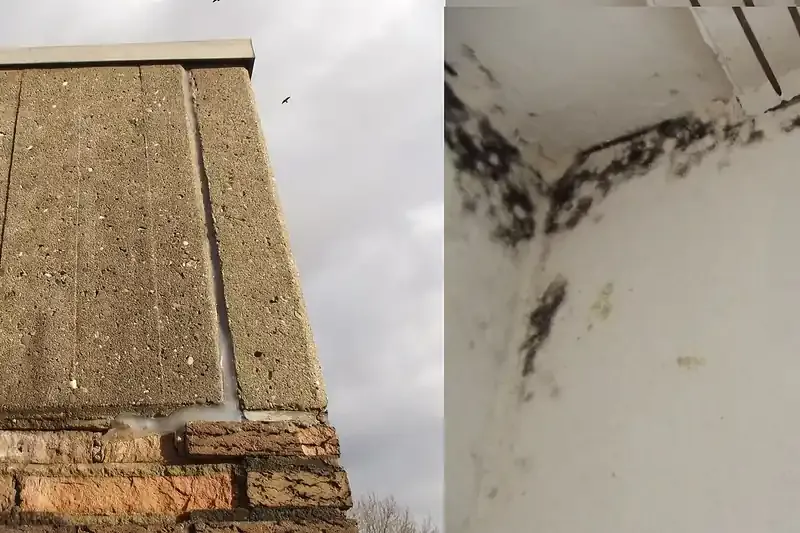
Why mold grows in Flagstaff homes
Flagstaff's air is dry most of the year, so mold here is a moisture problem more than a climate problem. It shows up where water has been hiding: under a sink with a slow drip, behind a shower wall, in an attic wet from an ice dam, in a crawl space after snowmelt, or in a wall where a pipe split last winter and was never properly dried.
Mold needs three things: moisture, food and time. Drywall paper, wood and dust are all food, and at room temperature growth can start on wet materials within 48 to 72 hours. In Flagstaff the cold slows things a little in winter, but a heated house is warm enough, and the summer monsoon raises indoor humidity just as many homes are dealing with storm leaks. The guide on mold after water damage explains that timeline.
- Musty smell that is stronger in one room, closet or the crawl space.
- Spots or staining in black, green, gray or white, often in corners, behind furniture or around windows.
- Peeling paint or soft drywall near a past leak.
- Allergy symptoms that ease when you leave the house.
Mold remediation step by step
Mold remediation is not the same as cleaning mold off a surface. The goal is to remove growth without spreading spores to the rest of the house, then fix what caused it. Most reputable companies follow the IICRC S520 standard and EPA guidance.
- Inspection. Find all the growth and the moisture source, using meters and sometimes thermal imaging.
- Containment. Plastic sheeting seals the work area. A HEPA air scrubber creates negative pressure so spores are pulled out of the house rather than into it.
- Removal. Moldy drywall, insulation and carpet are cut out and bagged inside the containment. Structural wood is cleaned by sanding, wire brushing or soda blasting, then HEPA-vacuumed.
- Cleaning. Remaining surfaces are HEPA-vacuumed and damp-wiped. Antimicrobials may be applied but are not a substitute for removal.
- Drying and moisture fix. The leak is repaired and materials are dried, often under water mitigation.
- Clearance. A visual check and, if requested, air or surface sampling by an independent tester before walls are closed.
Black mold removal
"Black mold" usually means Stachybotrys, a dark mold that grows on drywall and wood that stayed wet for a long time. Many common molds are also dark, and you cannot tell species by color. In practice it does not change the method much: any significant mold growth inside a home should be removed with containment, whatever the species. If the area is larger than about ten square feet, EPA guidance recommends professional remediation rather than doing it yourself.
Bleach is not the answer for drywall or wood. It whitens the surface while the roots stay in the porous material, and the water in bleach can feed regrowth. Porous materials with growth are removed; hard surfaces are cleaned.
Mold inspection and testing
Testing is useful when you smell mold but cannot see it, when someone in the house has health concerns, for real estate transactions, and to confirm a job is finished. It is less useful when mold is plainly visible; in that case the money is better spent removing it.
| Test | What it tells you | Typical cost |
|---|---|---|
| Visual inspection with moisture mapping | Where the water and growth are | $150–$400 |
| Air sampling (indoor plus outdoor baseline) | Whether indoor spore levels are elevated | $300–$700 |
| Surface tape or swab samples | What is growing on a specific spot | $50–$150 per sample |
| Post-remediation clearance test | Whether the work area is back to normal | $300–$900 |
For a clean result, many homeowners use an independent tester rather than the company doing the removal. Arizona does not have a state mold licensing program, so ask about IICRC certification and experience instead.
Mold in crawl spaces and attics
These are the two most common hidden mold locations in the Flagstaff area. Crawl spaces get wet from snowmelt, plumbing leaks and monsoon runoff, and mold grows on the floor joists and subfloor. Attics get wet from ice dams, roof leaks and bathroom fans that dump warm moist air into the attic instead of outside; in winter that moisture freezes on the cold roof sheathing and then melts, leaving dark staining on the underside of the roof deck.
Crawl space and attic remediation usually costs more because of access and the area involved, commonly $2,000 to $6,000. The fix almost always includes a moisture correction: a new vapor barrier, sealing vents, rerouting a bath fan, or adding attic insulation and ventilation to stop ice dams.
Mold remediation cost in Flagstaff
A small area under ten square feet often runs $500 to $1,500. Room-sized remediation with containment and drywall removal commonly costs $1,200 to $3,500. Crawl spaces, attics and multi-room jobs more often land between $2,000 and $6,000, and large or HVAC-related jobs can go higher. Rebuilding drywall and finishes afterward is a separate line, covered on the water damage repair page.
Insurance typically covers mold only when it results from a covered water loss, such as a sudden pipe burst, and many policies cap mold coverage at a set dollar amount. Mold from long-term leaks or humidity is usually excluded. The sooner water is dried after a leak, the less likely mold becomes a separate fight with your insurer.
Mold during a home sale in Flagstaff
Mold often surfaces during a home inspection, especially in crawl spaces and attics. Arizona sellers are expected to disclose known material defects, and past water damage or mold is something buyers ask about. If an inspector finds mold, a written remediation scope from a qualified company, followed by a clearance test, gives both sides a clear record. Buyers should ask what caused the mold and whether that moisture problem was fixed.