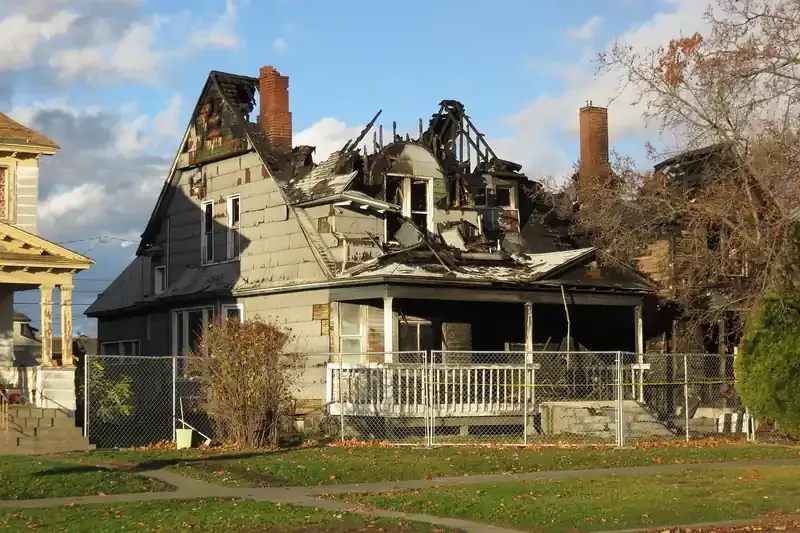
The first 48 hours after a house fire
Fire damage gets worse after the flames are out. Soot is acidic, and within hours it starts to yellow plastics and etch glass, chrome and stone. Within days it can permanently stain paint, grout and finishes. Water from firefighting soaks drywall, insulation and floors and sets up mold if it is left. And an open roof or broken windows invite weather, animals and theft.
That is why the first visit after a fire is about securing and stabilizing, not rebuilding:
- Board-up and tarping. Windows, doors and holes in the roof are covered. In Flagstaff winters this also keeps snow and freezing temperatures out of a house with no heat.
- Water removal. Firefighting water is extracted and drying begins, just like water removal after a leak.
- Pipes in winter. A house without power or heat in a Flagstaff winter can freeze and burst pipes on top of the fire damage. Draining the plumbing is often part of securing the house.
- Inventory and photos. Every room is documented for the insurance claim before anything is thrown away.
How fire damage restoration works
- Assessment. The crew separates fire damage (charred, structural) from smoke damage (soot residue, odor) and water damage.
- Demolition of burned materials. Charred framing, drywall, insulation and flooring are removed. Structural members are evaluated; some can be sealed, others have to be replaced.
- Soot removal. Dry soot is vacuumed with HEPA equipment and wiped with dry chemical sponges before any wet cleaning. Greasy or protein soot from kitchen fires needs degreasers. The smoke and soot cleanup page goes deeper.
- Contents. Salvageable belongings are packed out, cleaned off site and stored. Electronics, textiles and documents each have their own cleaning methods.
- Odor removal. Thermal fogging, hydroxyl generators or ozone treatment, plus sealing framing with an odor-blocking primer.
- Rebuild. Framing, drywall, electrical, finishes, cabinets and flooring are rebuilt, often with permits through the City of Flagstaff or Coconino County.
Common causes of house fires in Flagstaff
Flagstaff's mountain lifestyle brings a few specific fire risks along with the usual ones.
- Wood stoves, fireplaces and chimneys. Creosote buildup in chimneys that see heavy winter use is a leading cause of chimney fires. Annual sweeping matters.
- Ash disposal. Hot ashes dumped into a cardboard box or a plastic bin on a wood deck can smolder for days.
- Space heaters. Common during cold snaps and power outages, and often too close to curtains or bedding.
- Cooking. Still the most common cause of home fires nationally.
- Wildfire embers. Neighborhoods along the forest edge, such as Timberline, Fernwood, Kachina Village and Mountainaire, face ember exposure during wildfire season. The Tunnel Fire in April 2022 destroyed homes northeast of Flagstaff.
Fire damage restoration costs
Fire jobs vary more than any other kind of restoration because they range from a scorched kitchen cabinet to a total loss. Emergency board-up and tarping usually runs $500 to $2,500. A small kitchen fire with smoke in nearby rooms commonly costs $3,000 to $15,000 to clean and repair. A room fire with smoke throughout the house often runs $15,000 to $50,000. Major structural fires that need extensive rebuilding go well past $50,000.
| Cost driver | Why |
|---|---|
| Type of soot | Dry soot from wood or paper is easiest; greasy kitchen soot and synthetic-material soot take longer. |
| How far smoke traveled | Smoke goes through ducts, attics and wall cavities, not just the room that burned. |
| Water used to fight the fire | Adds extraction, drying and sometimes mold prevention. |
| Contents | Pack-out, cleaning and storage of belongings is a major cost line. |
| Code upgrades | Rebuilt areas may need current electrical and building code compliance. |
Fire damage and your insurance claim
House fires are generally covered by homeowners insurance, including additional living expenses while you cannot live at home. Two things make the claim go smoother: documentation and patience about what gets thrown away. Do not discard damaged items before they are photographed and listed. Ask for a written scope of work in the same estimating format the insurer uses. If the loss is large, some homeowners hire a public adjuster; that is your choice and not required.
Your insurer may recommend a restoration company, but you can choose your own. Check that whoever you hire carries an Arizona ROC license for rebuild work and proof of insurance.
Fire, smoke and water together
Almost every fire job is also a water job and a smoke job. Water damage from firefighting follows the water mitigation process. Smoke that traveled into rooms the fire never reached is handled under smoke damage cleanup. If drying was delayed, mold can follow, covered on the mold remediation page.
Living arrangements and contents after a fire
Even a moderate fire can keep a family out of the house for weeks while smoke is cleaned and damaged areas are rebuilt. Most homeowners policies include additional living expenses, which pay for a hotel or rental and some meals above your normal costs. Keep receipts. Ask your adjuster how long they expect to cover it and what documentation they need.
Contents pack-out is often the most stressful part. A restoration crew will inventory, photograph and box salvageable items, clean them off site and store them until the house is ready. Ask for a copy of the inventory. Items that cannot be cleaned are listed for the claim before disposal. Important documents, photos and keepsakes can often be restored with specialized freeze-drying and cleaning, so set them aside rather than throwing them away.
Wildfire and your home
Homes that survive a nearby wildfire can still need restoration: smoke and ash inside, heat damage to siding, windows and vinyl fixtures, and sometimes water from fire crews protecting the structure. After an evacuation, walk the house before turning on the HVAC, replace filters, and photograph everything. The smoke damage cleanup page covers ash and odor removal in detail.