Smoke damage is residue, not just a smell
Smoke is made of tiny particles of burned material and gases. When it cools, those particles settle as soot on every surface and get drawn into soft materials, wall cavities and ductwork. The smell comes from that residue. Air fresheners and open windows help for a day; the odor comes back on the next warm or humid day because the source is still there.
Different fires leave different soot, and each needs a different cleaning method:
| Type of residue | Typical source | How it is cleaned |
|---|---|---|
| Dry, powdery soot | Wood, paper, fast hot fires | HEPA vacuum and dry chemical sponges first, then wet cleaning. |
| Wet, smeary soot | Plastics and synthetics, slow smoldering fires | Specialized cleaners; smears easily if wiped dry. |
| Protein residue | Kitchen fires, burned food | Nearly invisible, strong odor; degreasers and odor treatment. |
| Wildfire smoke | Forest fires nearby | Fine ash on surfaces, odor in fabrics and HVAC; HEPA cleaning and air scrubbing. |
Wildfire smoke cleanup in Flagstaff
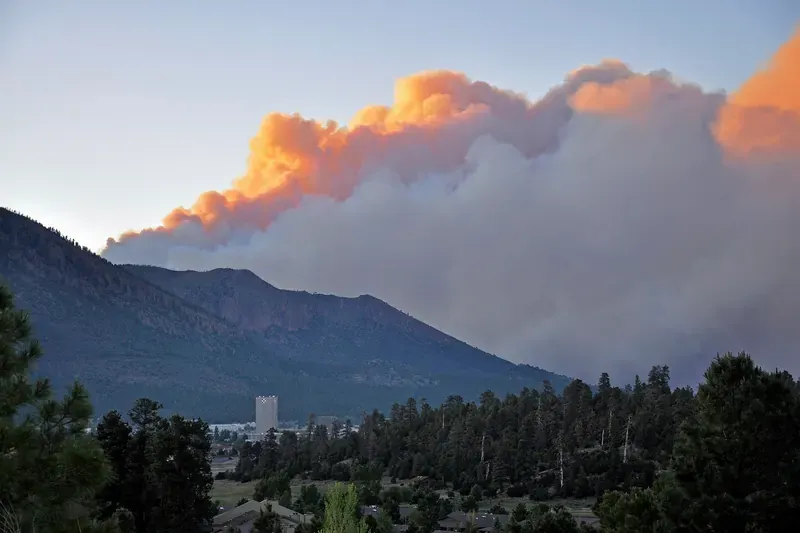
Flagstaff lives with wildfire smoke. The Schultz Fire in 2010, the Museum Fire in 2019, and the Tunnel and Pipeline Fires in 2022 all put heavy smoke and ash over parts of town. Even fires farther away, on the Mogollon Rim or the Kaibab Plateau, can fill the valley with smoke for days.
Homes that were not burned can still need cleaning afterward, especially those with open windows or an evaporative cooler running during the event. Swamp coolers, still common in Flagstaff homes, pull outside air straight in. Typical wildfire smoke cleanup includes:
- HEPA vacuuming of ash from surfaces, window tracks and sills.
- Cleaning of hard surfaces and walls with appropriate solutions.
- Laundering or professional cleaning of curtains, bedding and upholstery.
- Replacing furnace filters and cleaning ducts if ash entered the system.
- Cleaning or replacing swamp cooler pads.
- Air scrubbing with HEPA filtration and, when needed, hydroxyl or ozone odor treatment.
Many homeowners policies cover smoke damage from a nearby wildfire even if the house never caught fire. Document ash and odor with photos and notes on the dates.
How smoke and soot cleanup is done
- Assess the spread. Soot tags, white cloth wipes and odor checks show how far smoke reached, including closets, attics and ducts.
- Dry soot removal. HEPA vacuums and dry sponges lift loose soot without grinding it into surfaces.
- Wet cleaning. Walls, ceilings, cabinets and hard surfaces are cleaned with solutions matched to the soot type.
- HVAC. Filters are replaced; ducts are cleaned if soot entered the system, or the whole house gets recontaminated.
- Contents. Clothes, linens, upholstery and electronics are cleaned on site or packed out.
- Odor treatment. Thermal fogging, hydroxyl generators or ozone treatment neutralize remaining odor molecules. Ozone requires the house to be empty of people, pets and plants.
- Seal if needed. Surfaces that still hold odor, such as framing near the fire, are sealed with a shellac-based primer before repainting.
Smoke cleanup is often part of a larger fire damage restoration job. When only smoke came in, from a nearby fire, a small kitchen fire or a furnace puff-back, it can be its own project.
Furnace puff-backs and small fires
A puff-back happens when an oil or poorly maintained gas furnace misfires and sends a cloud of soot through the ducts into every room. A small kitchen fire, a smoldering couch or a candle accident can do something similar on a smaller scale. These jobs look minor at first, until you notice the thin gray film on light switches, blinds and ceiling corners in rooms far from where it happened.
Do not try to wipe it off with a wet rag. Soot smears and sets, turning a cleaning job into a repainting job. Shut off the HVAC, replace the filter, and get it cleaned properly.
Smoke damage cleanup costs
Odor treatment alone for an average home typically runs $1,000 to $2,500. Soot cleaning in one or two rooms commonly costs $1,500 to $4,000. Whole-house smoke cleaning with duct cleaning and contents more often lands between $4,000 and $10,000. Costs rise with the amount of soft goods, the type of soot, and whether walls need sealing and repainting.
Smoke damage is generally covered by homeowners insurance when caused by a covered fire, including fires next door or wildfires. Keep the damaged items until the adjuster has seen them.
Health and smoke residue
Soot particles are fine enough to reach deep into the lungs. People with asthma, small children, older adults and pets are most sensitive. Until cleaning is done, keep the house ventilated with clean air, run a HEPA air purifier, and avoid stirring up soot. If smoke came with firefighting water, the water mitigation steps run alongside the smoke cleanup to prevent mold.
Clothing, furniture and electronics after smoke
Most smoke-damaged belongings can be cleaned. Clothes and linens usually come clean with professional laundering or dry cleaning using deodorizing agents; home washing sometimes sets the odor. Upholstered furniture and mattresses depend on how heavy the exposure was; light wildfire smoke often cleans up, while heavy soot from a house fire may not. Electronics should not be turned on until cleaned, because soot is conductive and acidic and can short or corrode circuit boards. Hard furniture, dishes, and decor clean well.
- Separate smoke-damaged items from clean ones so odor does not transfer.
- Keep a list and photos of everything for your claim.
- Throw out food, medicine and cosmetics exposed to smoke or heat.